2. Mastering “Time-of-Use” (ToU) Tariffs
In 2026, more Australian households have been transitioned to Time-of-Use tariffs. This means electricity is not one flat price; the cost per kilowatt-hour ($c/kWh$) fluctuates based on the time of day.
Avoiding the “Peak Trap”
- Peak Hours (3 PM – 9 PM): This is the most expensive time to use power in NSW, VIC, and QLD. It coincides with the “dinner rush” when families turn on ACs, ovens, and dishwashers simultaneously.
- The Fix: Shift heavy appliance use. Use the delay start timer on your washing machine or dishwasher to run after 10 PM (Off-Peak) or during the middle of the day (Shoulder) when solar generation is high and grid prices are often lower.
3. How to Prevent “Bill Shock” Using Tech
The biggest issue with traditional billing is that it is “backward-looking.” You only see the financial impact of a heatwave three months later.
Real-Time Monitoring and Alerts
Most major 2026 retailers—including Origin, AGL, and Engie—provide smart apps that track usage in near real-time.
- Set Usage Alerts: Access your provider’s app and enable “Budget Trackers.” * Daily Thresholds: Set a notification to ping your phone if your daily spend exceeds a specific limit (e.g., $10/day). This allows you to adjust your habits in week one rather than facing a $900 surprise at the end of the quarter.
Frequently Asked Questions
What is the most energy-efficient temperature for air conditioning in Australia?
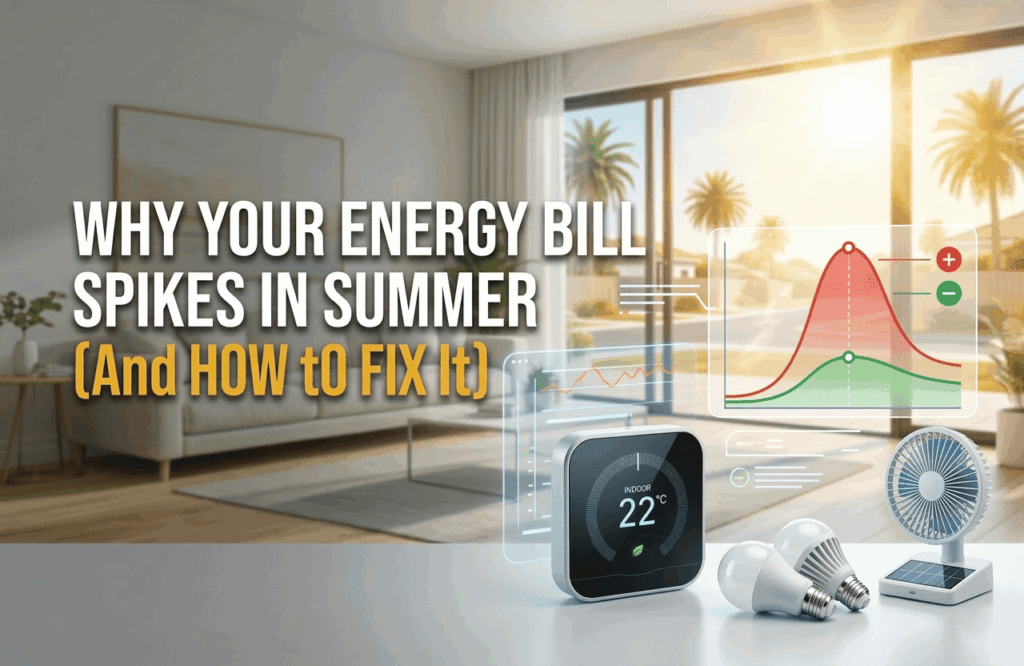
For the best balance of comfort and cost, set your air conditioner to 24°C. Setting it lower significantly increases the load on the compressor, leading to a spike in your usage rate.
Is it cheaper to leave the air con on all day or turn it on and off?
Generally, it is cheaper to turn the AC off when you are not home. However, on extreme heat days, turning it on early (before the house heats up) allows the unit to maintain a steady temperature more efficiently than trying to “crash cool” a boiling house at 5 PM during Peak pricing.
Which appliances use the most electricity in summer?
Beyond air conditioning, the biggest energy consumers are pool pumps, clothes dryers, and secondary “drinks fridges” kept in hot garages, which must run constantly to stay cool.