1. The Plain-English Explanation
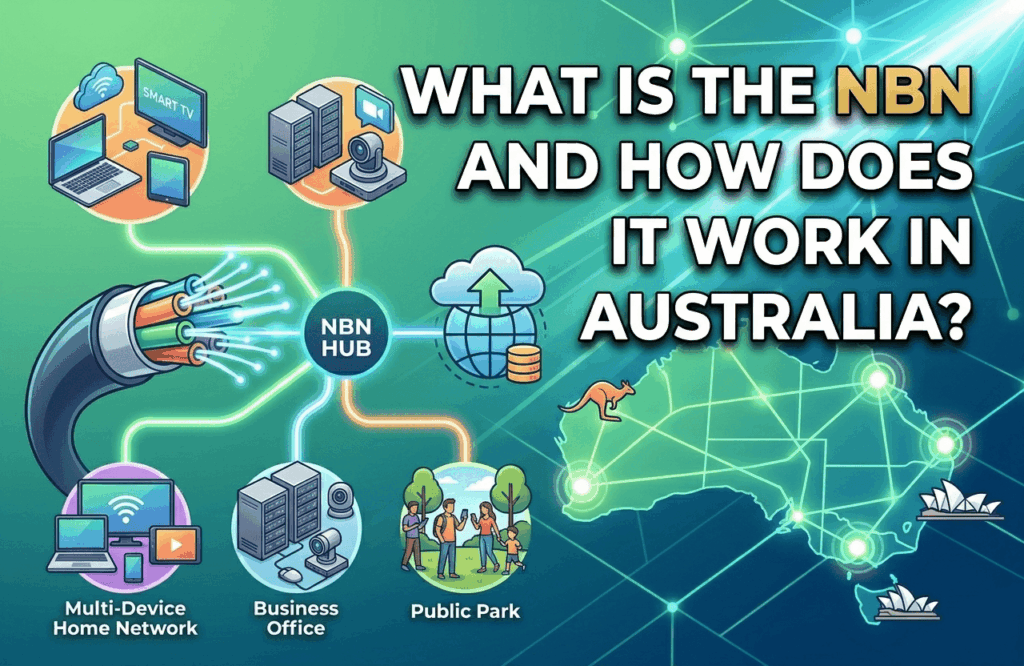
The National Broadband Network (NBN) is a massive project designed to replace Australia’s old copper phone lines with modern technology. Think of it like a giant plumbing project: for decades, we were trying to push high-speed data through old, rusty pipes (copper). The NBN is the process of replacing those with new, high-capacity pipes (fibre optics).
The key thing to remember: NBN Co is a wholesaler. They build and maintain the “pipes,” but they don’t sell internet directly to you. Instead, they sell access to companies like Telstra, Optus, TPG, and Aussie Broadband, who then sell it to you as a monthly plan.
2. The Connection “Alphabet Soup”
Not all NBN connections are created equal. Depending on where you live, the NBN gets to your house in one of five main ways:
- FTTP (Fibre to the Premises): The “Gold Standard.” A fibre-optic cable runs all the way into your house. It is the fastest, most reliable, and now supports speeds up to 2,000 Mbps (2 Gbps).
- HFC (Hybrid Fibre-Coaxial): This uses the thick cables originally laid for Pay TV. It’s incredibly fast and, as of 2026, most HFC homes can now access the same “Hyperfast” speeds as FTTP.
- FTTC (Fibre to the Curb): A middle ground. Fibre runs to a small pit just outside your driveway. 2026 Update: As of July 2026, NBN Co has removed the “high-speed plan” requirement for FTTC upgrades—meaning roughly 600,000 homes can now get full fibre for $0 without needing to buy an expensive plan first.
- FTTN / FTTB (Fibre to the Node/Building): Fibre runs to a green box on your street, and old copper carries the signal the rest of the way. These are being phased out in favor of fibre upgrades.
- Fixed Wireless & Satellite: Used in regional areas. Your house has an antenna that talks to a tower or a satellite (Sky Muster). In 2026, Fixed Wireless speeds have seen a massive boost, with some areas hitting 400 Mbps.
3. How to Find Your Technology Type
You don’t need to go digging in your front yard to find out what you have. It takes less than 30 seconds to check online:
- Visit the Official NBN Website: Go to nbnco.com.au.
- Use the Address Checker: Type your full address into the search bar.
- Read the Results: The site will instantly tell you your “Technology Type” and, most importantly, if you are eligible for a “Fibre Connect” upgrade.
Frequently Asked Questions
Is the NBN “Full Fibre” upgrade really free?
Yes, for most eligible FTTN and FTTC households. In 2026, the process is simpler than ever. If the NBN website says you are eligible, you simply place an order for a qualifying plan (usually NBN 100 or higher) with your provider, and NBN Co will send a technician to install the new fibre line for $0.
What is the fastest NBN speed available in 2026?
The new NBN 2000 (Home Hyperfast) tier is the flagship for 2026, offering download speeds of up to 2,000 Mbps. It is available to almost all homes with FTTP and HFC connections.
Does the NBN work during a power blackout?
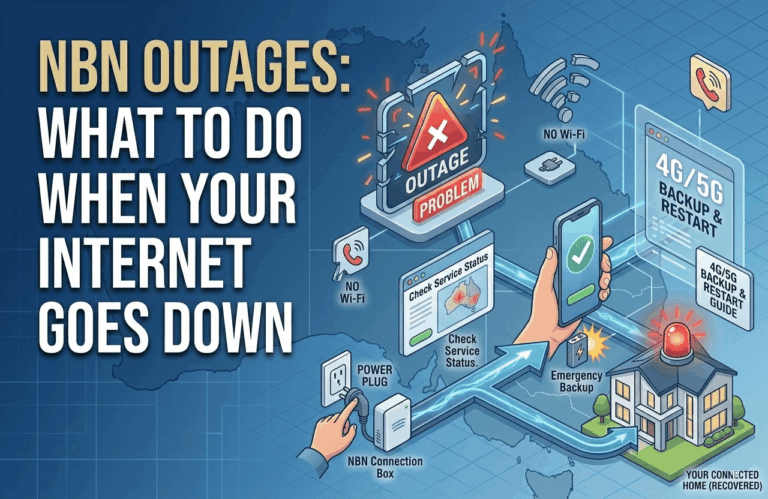
Generally, no. Unless you have a specific Battery Backup unit (mostly found on older FTTP installations) and your own backup power for your Wi-Fi router, your internet will go down during a blackout. Fixed Wireless and Satellite services are also affected if the local transmission tower loses power.