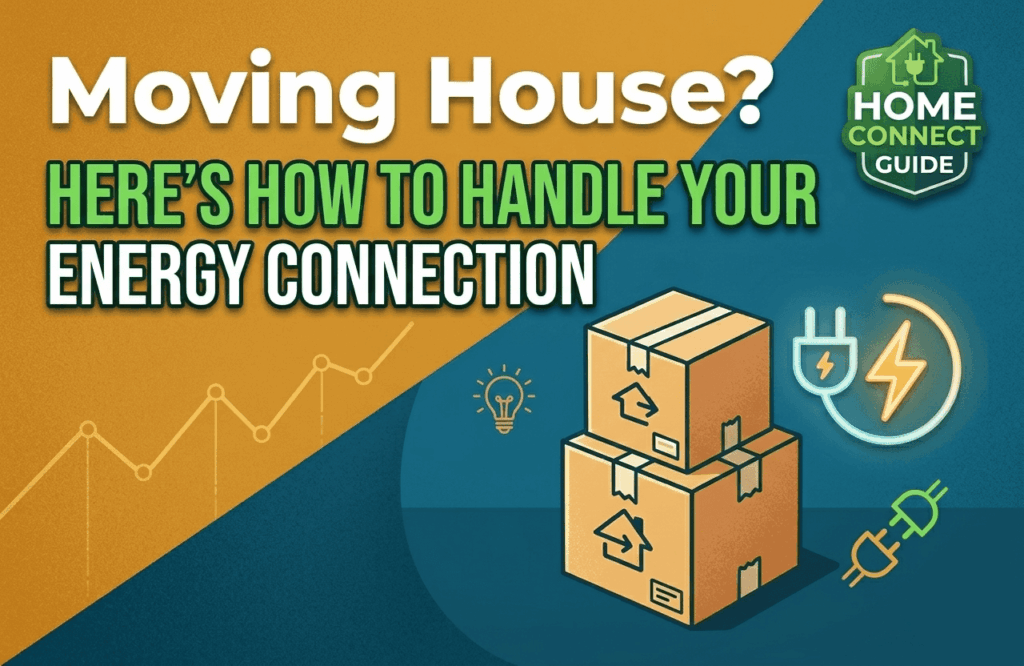

Moving House? Here's How to Handle Your Energy Connection

Packing boxes and booking removalists are usually top priorities, but your energy connection is what turns a house into a home. Nobody wants to spend their first night in a new place eating cold takeaway in the dark.
In 2026, setting up utilities is faster than ever, with some states offering same-day digital activation. Here is your step-by-step guide to a seamless move.
Get a budget deal
1. Setting Up Your New Connection
Unlike your Netflix account, your energy doesn’t “follow” you automatically. You must explicitly close your old account and open a new one.
- The 3-Day Rule: Most retailers require at least three business days’ notice to guarantee the lights are on. If you’re staying with your current provider, you can usually book this via their app in minutes.
- The “Main Switch” Safety Trap: This is the #1 reason for connection failures. When you arrive at the new property, ensure the Main Switch in the fuse box is in the OFF position. For safety reasons, many distributors will not remotely connect power if they detect any load (appliances being “on”) inside the house.
- Final Meter Read: Always book a “final read” for your old property on your move-out day. Without it, you could be liable for the new tenant’s power usage until they create their own account.
2. Moving Interstate? Beware the “Border Trap”
If you’re moving from Melbourne to Sydney or Brisbane to Adelaide in 2026, the energy rules and costs change the moment you cross the border.
- Cut-off Times for Urgent Connection: If you forgot to book, most retailers have a 1:00 PM (local time) cut-off for next-day connections.
- NSW/ACT: Submit by 10:30 AM for the best chance of same-day power.
- VIC: Cut-offs range from 11:00 AM (Ausnet) to 1:30 PM (others).
- QLD/SA: Aim for before 11:00 AM for next-day service.
- Gas vs. Electricity: Electricity is often connected via digital smart meters within 24 hours. Gas, however, can still take 3–5 business days as it often requires a technician to physically visit and remove a “lock” or take a manual read.
3. Who Pays the Fees: Landlord or Tenant?
The 2026 rules for rental utility costs are strictly defined by state tenancy laws:
Fee Type | Typical Cost (2026) | Responsible Party |
Account Setup / Connection | $15 – $95 | Tenant (Appears on your first bill). |
Initial Connection (New Build) | $500 – $2,000+ | Landlord (Physical infrastructure). |
Disconnection Fee | $10 – $60 | Tenant (Final bill at the old place). |
Urgent/Same-Day Fee | $100 – $400 | Tenant (Avoid by booking 3 days early). |
- NSW/VIC/SA Rules: If the property is “separately metered,” the tenant pays for usage and connection fees. However, if the landlord hasn’t provided gas appliances and you don’t use gas, the landlord must pay the daily gas supply charges.
- New Property Connections: If you are the first person moving into a brand-new build, the landlord must pay all costs to physically connect the property to the main grid and ensure it is fit for habitation.
Frequently Asked Questions
What happens if I move in and there is no power?
Check the fuse box first. If the Main Switch is “On,” flick it “Off” and then “On” again. If it was already “Off,” call your retailer. In 2026, most major brands have a “Move Promise” where they will reimburse you for temporary accommodation or dry ice if they fail to connect you on the agreed date.
Do I have to pay a bond to the energy company?
Most retailers in 2026 do not require a bond if you pass a basic credit check. However, if you are a new resident in Australia or have a history of late payments, they may ask for a Security Deposit (usually ~$200) or offer a “Pre-paid” plan.
Can I move my “Solar Feed-in Tariff” to a new house?
No. Feed-in tariffs are tied to the specific solar system at the address. If your new home has solar, you will need to sign a new contract based on the size and type of that specific system.